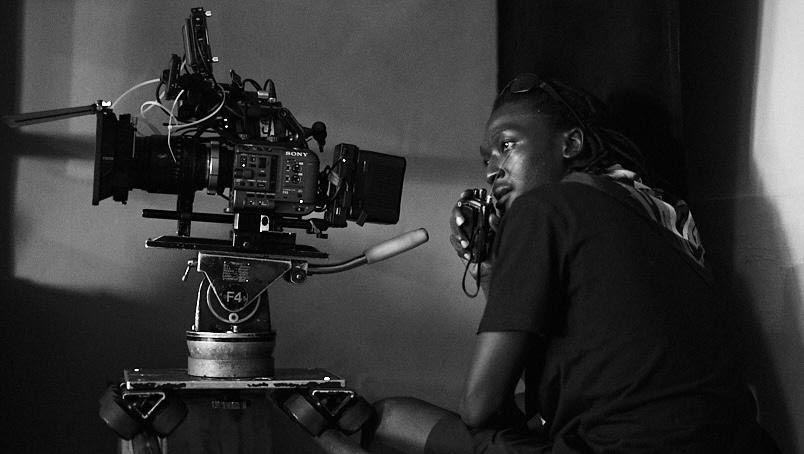
It is a proud and inspiring moment for Plateau State and the Nigerian creative industry as Finding Nina, a film by the filmmaker Daanong Gyang, secures a prestigious nomination at the 12th Africa Magic Viewers’ Choice Awards (AMVCA).
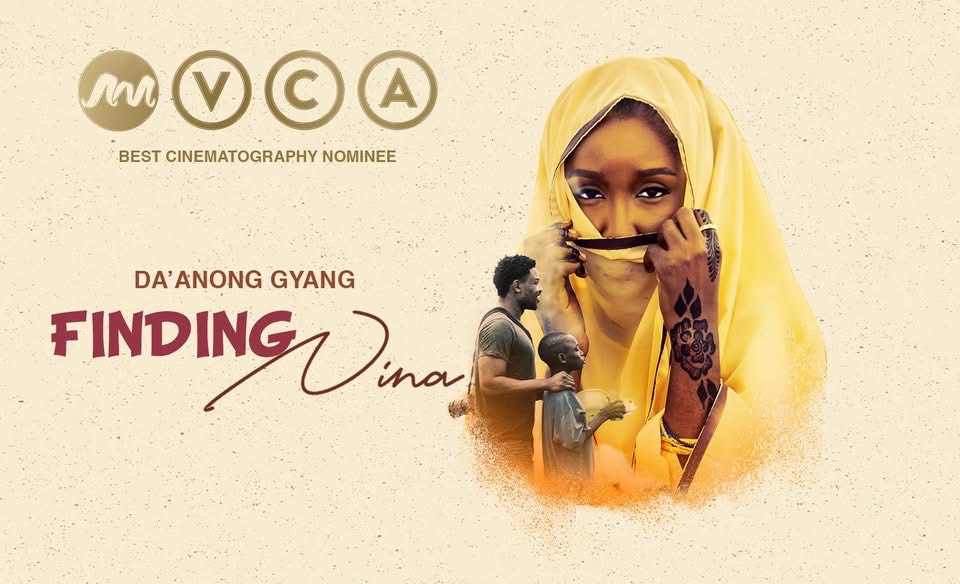
The film has been nominated in the highly respected category of Best Cinematography, one of the most technically admired honours in film and television. The AMVCA remains one of Africa’s biggest platforms celebrating excellence, innovation, and outstanding achievements in the entertainment industry.
This nomination is a powerful recognition of the role cinematography plays in storytelling. More than simply capturing scenes, cinematography is the visual language of film, using light, colour, movement, composition, and camera angles to create emotion, atmosphere, and connection with audiences.
Finding Nina has drawn attention for its exceptional visual presentation, thoughtful framing, emotionally rich scenes, and the ability to communicate meaning through every shot. Its imagery does more than complement the story, it deepens it, allowing viewers to feel the emotions and atmosphere long after the final scene.
For Daanong Gyang, this honour reflects years of creativity, discipline, and artistic excellence. It also places a deserved spotlight on the growing wave of talent emerging from Plateau State, a region increasingly recognised for contributing richly to Nigeria’s cultural and creative landscape.

As anticipation builds for the awards ceremony, this nomination already stands as a victory worth celebrating.
In an interview with WeJosRock, Daanong said that his philosophy and principles in filmmaking are rooted in the belief that story is paramount, and that his role is to serve the entirety of that story. He described himself as a student of naturalistic filmmaking, drawing inspiration from cinematographers like Roger Deakins and Bradford Young, who emphasize that both beautiful and purposeful cinematography exist, each uniquely suited to a story. As a result, he approaches every script with an inquisitive mindset, seeking to discover the visual language specific to it.
He explained that he does not conduct research merely to create visuals or replicate shot setups from other projects. Instead, he probes each script thoroughly to understand how best to interpret its emotional core using light, camera movement, framing, aspect ratio, depth of field, composition, and other cinematic tools. He referenced Finding Nina as a case study of his approach, noting that he used soft, warm lighting on characters while maintaining contrast on their faces to create form and dimension, intentionally drawing attention to their expressions. He added that he lit the background a few stops below normal exposure to create a vignette effect, guiding the viewer’s focus toward the characters, who were often positioned in the brightest parts of the frame.
He further noted that in scenes intended to convey the surreal and grand nature of the environment, he deliberately made the characters appear small in relation to their surroundings, emphasizing the environment as a central theme in the story.
Addressing equipment, he stated that while it is important, he does not prioritize gear over competence. He believes a camera is only as effective as the mind behind it, emphasizing that what truly matters is what the filmmaker brings to the camera. He illustrated this with Finding Nina, which was shot on a mid-range Sony FX3 camera, noting that many people are often surprised by this given the film’s high-quality visuals. He attributed this to carefully crafted lighting and meticulous camera placement.
Although he favors a naturalistic approach, he said he also embraces stylized or abstract imagery when the story requires it. Using a dream sequence as an example, he explained that since memories often feel foggy upon waking, he might intentionally reduce detail, texture, and form to convey obscurity. In Finding Nina, he achieved this effect using a “poor man’s process,” smearing Vaseline on the edges of a clear glass filter while leaving the center clean, thereby maintaining clarity in the middle of the frame and softening the edges.
In conclusion, he stated that he considers himself a servant of the script, which remains his guiding principle on any project. He believes a strong film can only emerge from a strong script, and that his goal is for audiences to leave with a lasting impression, knowing that every visual choice was made in service of the story and shaped through collaboration with the director.
Congratulations to Daanong Gyang and the entire Finding Nina team on this remarkable and well-deserved recognition. The spotlight is truly earned.