Shendam
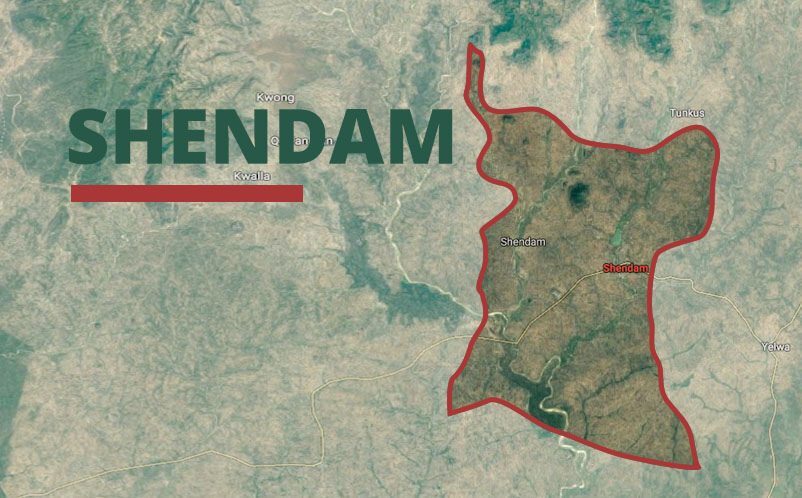
Shendam Local Government Area, established in 1976, is situated 254 km to the south of Jos, the capital of Plateau State. Covering approximately 2,437.15 square kilometers, it is home to a population of 208,017, as per the 2006 census projection.
The primary indigenous tribe in this region is the Goemai, while other settlers include the Ngas, Montol, Mupun, Taroh, Mwaghavul, Kwalla, Fulani, Igbo, Yoruba, and more.
In response to the realization that preserving culture is essential for societal identity, the Goemai Unity and Development Organisation (GUDO) was formed in the early 1980s. This organization aims to promote unity and development among the Goemai people and showcase their rich cultural heritage to the world.
A significant event organized by GUDO is the Bít Goemai (Goemai Day) National Festival of Arts and Culture, inaugurated in 1986. This festival features a vibrant display of cultural dances, masquerades, and a variety of local Goemai dishes.
Cultural Dances
Kallangu
A popular Goemai dance where participants, both men and women, form a revolving circle. Women wear the Goemai Cultural Attire (Adere) from the chest downward, while men tie Adere from their waist downward.
Swaal
Swaal masquerades are known for their cult-like costume and the participation of women who hold two bats (beets) in their hands, creating loud sounds in rhythm with drumbeats. Swaal masquerades also wear metal accessories on their legs for added sound effects.
Kwamteng
A cult dance performed by initiated men who dress in Adere during the performance.
Jap Kool
Newly initiated young men, after rigorous training in the shrine, participate in the Kwamteng dance and are confirmed as full members.
Dabit Masquerade
The supreme masquerade in Goemai land, appearing during significant events like the death of the Lòng Goemai or the installation of a new Lòng Goemai. Dabit’s verdict is final in any matter involving Goemai masquerades.
Jap-Jan
The most popular and friendly Goemai masquerade dance group, known for its versatility and ability to perform at various occasions without cultural or religious restrictions.
Local Dishes
During auspicious occasions, the Goemai people showcase their cherished local dishes, including:
Mwollam (Amorah)
Starch prepared with ingredients like tomatoes, tatase, ridi (beneseed or groundnuts), Maggi, salt, fish, or meat. There is also baked amorah with simpler ingredients like groundnuts, maggi, and salt.
Soema (Risga)
Dried risga soaked in water, boiled, and mixed with groundnut cake (kulikuli), pepper, tomatoes, onions, and other seasonings.
Shendam LGA also boasts several tourist attractions, such as the Jelbank Rock, Nroam Lake, Shargang Lake, and Dogon Ruwa at Jiban & Kuka.
In addition to the Bít Goemai National Festival of Arts and Culture, various communities within the Goemai nation organize cultural festivals like Bit Poll & Bit Ngwa, Bit Goeka, Bit Kalong and Bit Poeship, Bit Ngootlong, Bit Ngootdu’ut, and Bit Nder, each celebrated at specific times throughout the year.
Agriculture and Crop Cultivated in Shendam Local Government: Yams, Rice, Guinea corn, Maize, Cassava, Millet, Groundnuts.
Agriculture and Crops Cultivated in Shendam Local Government
Yams, Rice, Guinea corn, Maize, Cassava, Millet, Groundnuts.
Local Markets in Shendam
-
Shimankar & Bakin Kogi market; items sold: Yams, rice, millet, Cassava, Fish.
-
Yelwa Inshar Market; Items sold: Yams, rice, millet, Cassava, Fish.
-
Ramsbia market; Items sold: Yams, Rice, Millet, Cassava.
-
Biem Biem & Moekat Market; items sold: Yams, Rice, Millet, cassava.
-
Shendam Market; Items sold: Yams, rice, millet, Cassava, Fish.